Source Eco-Friendly Wrinkle Resistant Seersucker Fabric for Garment, Dress, and Skirt
Find 30 verified listings for Eco-Friendly Wrinkle Resistant Seersucker Fabric suitable for garment, dress, and skirt applications. Compare specifications including fiber types, physical features, and MOQs from Jiangsu suppliers to identify the best match for your production needs.
Key considerations
Products List


Plaid T400 Seersucker Fabric 100% Polyester Bubble Crinkle Stretch Fabric
$1.40 - $1.60
MOQ: 1500 Yards


Premium High Elastic Two Tone Jacquard Seersucker Fabric for Trendy Covers
$1.52 - $1.56
MOQ: 1000 Meters


Wholesale Crinkle Plain 100% Cotton Seersucker Check Fabric for Garment
$1.80 - $4.60
MOQ: 1000 Pieces


60 Combed Cotton 40 Polyester Seersucker Woven Fabric for Bedding Fabric
$1.80 - $2.50
MOQ: 200 Meters

Comprehensive Sourcing Guide
Strategic Sourcing Guide for Eco-Friendly Wrinkle-Resistant Seersucker Fabric
Understanding Technical Specifications and Fiber Composition
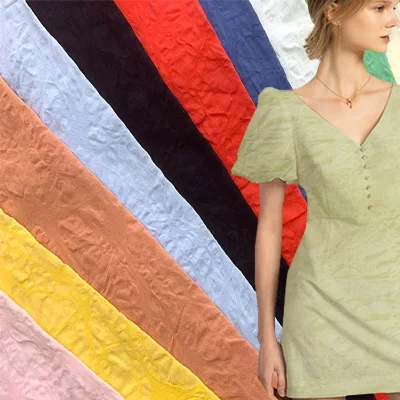
When sourcing eco-friendly wrinkle-resistant seersucker fabric, buyers must first navigate the complex landscape of fiber composition and physical construction. The term "seersucker" traditionally refers to a fabric characterized by a puckered texture, often achieved through specific weaving techniques or chemical treatments that create alternating smooth and wrinkled stripes. However, in the modern B2B market, the definition often expands to include fabrics that mimic this aesthetic while offering enhanced functional properties like wrinkle resistance.
Based on observed product attributes, the fiber types available in this category vary significantly. Some listings indicate "Short Fiber" compositions, while others specify "Filament" types. The material composition is equally diverse, ranging from 100% Polyester to blends such as Polyester/Cotton or Polyester/Rayon/Spandex. The "100% Polyester" standard is frequently cited as a baseline for durability and specific finishing capabilities, yet the "Polyester/Cotton" blend offers a different handfeel and breathability profile. For buyers seeking an eco-friendly angle, the distinction between synthetic filaments and natural or recycled short fibers is critical, as it dictates the end-of-life disposal and the carbon footprint of the garment.
The physical construction of the fabric is equally vital. The knitting and weaving technics observed include both "Warp" knitting and "Woven" structures. The "Woven" category is particularly relevant for traditional seersucker, where the interlacing of yarns creates the characteristic texture. Specific width specifications, such as 57/58 inches, are common, but buyers must verify if this aligns with their pattern-making requirements. Furthermore, the weight of the fabric, observed at 105 GSM in some instances, influences the drape and suitability for different garment types. A lighter weight may be preferable for summer apparel, while a heavier GSM could be necessary for structured workwear.
Functional Attributes and Performance Claims
The functional profile of seersucker fabric has evolved beyond simple aesthetics. Modern sourcing requires a deep understanding of performance claims, particularly regarding wrinkle resistance, which is a primary driver for this product category. The observed data highlights a robust set of functional attributes, including "Shrink-Resistant," "Tear-Resistant," and "Anti-Static" properties. These features are essential for maintaining the garment's appearance and longevity during wear and care.
In addition to wrinkle resistance, the fabric often boasts a suite of protective functions. Listings indicate capabilities such as "Waterproof," "Oil-Resistant," "Flame Retardant," and "Heat-Insulation." While these features are highly desirable, buyers must treat them as observations rather than universal guarantees. The presence of "High Colorfastness" and "Good Elastic" further enhances the utility of the fabric, ensuring that the seersucker pattern remains vibrant and the material retains its shape after repeated washing.
The "Handfeel" is another critical functional aspect. Descriptions such as "Smooth" and "Good Elastic" suggest a fabric that is comfortable against the skin, a necessary trait for garments like trousers, skirts, and dresses. However, the "Low Strength" attribute observed in some entries contrasts with the "High Strength" claims in others. This discrepancy underscores the importance of verifying the specific batch's tensile strength, especially for applications requiring durability, such as workwear or industrial textiles. Buyers should not assume that all seersucker fabrics possess high strength; rather, they must request specific test data to confirm the physical features match their application needs.
Compliance, Certification, and Eco-Friendly Verification
The "eco-friendly" designation in the core keyword demands rigorous verification of compliance and certification. While the supplied data mentions standards like "100% Polyester" or specific denier counts (e.g., 50D+75D*50D), it does not explicitly list third-party environmental certifications such as GRS (Global Recycled Standard), OEKO-TEX, or GOTS (Global Organic Textile Standard). Consequently, buyers cannot assume that a fabric labeled as "eco-friendly" automatically meets these rigorous benchmarks without direct confirmation from the supplier.
The origin of the fabric, often cited as "Jiangsu" or "Suzhou" in China, provides a geographical context but does not inherently guarantee environmental compliance. The "Jiangsu" region is a major textile hub, but environmental regulations and enforcement can vary. Buyers must inquire about the specific finishing processes used to achieve the "Wrinkle-Resistant" and "Anti-Wrinkle" properties. Some chemical finishes used for wrinkle resistance may involve formaldehyde or other substances that are restricted under various eco-certifications.
Furthermore, the "Customization" availability noted in the data suggests that suppliers may offer tailored solutions, which could include the use of recycled fibers or bio-based polymers. However, the "Standard" section lists various denier combinations (e.g., 75T8*50S+75T8) without specifying the source of the raw materials. To ensure the "eco-friendly" claim is valid, buyers should request documentation proving the recycled content percentage or the absence of hazardous chemicals. Without this evidence, the "eco-friendly" label remains a marketing observation rather than a verified fact.
Cost Drivers and Pricing Dynamics
The pricing of seersucker fabric is influenced by a multitude of factors, including fiber type, finishing complexity, and order volume. The observed price range in the market spans from 0.86 to 13 USD, a significant variance that reflects differences in quality, composition, and functionality. Lower-priced items often correspond to basic polyester constructions with standard finishes, while higher-priced options likely incorporate advanced functional treatments, such as flame retardancy or high colorfastness, and potentially higher-quality fiber blends.
The Minimum Order Quantity (MOQ) is another critical cost driver. The observed MOQ range is 1 to 3000 units, with a specific listing noting an MOQ of 1000 meters. This wide range allows for flexibility for both small startups and large manufacturers. However, the "1000 M" MOQ for specific models suggests that achieving the lowest unit price often requires substantial volume commitments. Buyers must balance their inventory needs against the cost benefits of bulk purchasing.
Lead times also impact the overall cost structure. The data indicates lead times of 7 to 10 days, which is relatively short compared to global shipping standards. However, this does not account for the time required for customization, sampling, and quality inspection. The "Inner Plastic Bag Outer PP Bag" or "Polybag Inside + Weaving Bag Outside" packaging requirements add to the logistical cost. Buyers should factor in these packaging specifications when calculating the total landed cost, as specialized packaging may be necessary to protect the fabric's delicate seersucker texture during transit.
Typical Applications and Usage Scenarios
The versatility of seersucker fabric is evident in its diverse application range. The data lists uses spanning "Garment," "Dress," "Trouser," "Pant," "Beach Pant," "Sports Legging," "Skirt," "Suit," "Workwear," "Jacket," and even "Industrial" and "Home Textile" sectors. This broad applicability makes seersucker a valuable asset for buyers looking to diversify their product lines.
For the fashion sector, the "Plain Dyed" and "Striped" patterns are particularly popular for summer collections. The "Plain Dyed" style offers a clean, uniform look, while the "Striped" pattern leverages the traditional seersucker aesthetic. The "Anti-Static" and "Shrink-Resistant" properties make these fabrics suitable for active wear and casual trousers, where comfort and maintenance are paramount. In the workwear sector, the "High Strength" and "Tear-Resistant" attributes are crucial, ensuring that the fabric can withstand the rigors of industrial environments.
The "Industrial" and "Home Textile" applications highlight the fabric's durability. The "Flame Retardant" and "Oil-Resistant" features are essential for protective clothing and upholstery. Buyers must match the specific fabric attributes to the intended use. For instance, a "Low Strength" fabric might be unsuitable for heavy-duty workwear but perfect for lightweight summer dresses. Understanding these nuances ensures that the selected fabric performs optimally in its final application.
Supplier Evaluation and Quality Control Protocols
Evaluating suppliers for seersucker fabric requires a systematic approach to ensure consistency and reliability. The "Customization" availability indicates that suppliers are willing to adapt to buyer needs, but this also necessitates a robust quality control (QC) process. Buyers should verify the supplier's ability to maintain the "100% Polyester" or "Polyester/Cotton" composition across different batches. Variations in fiber content can lead to inconsistent dyeing and finishing results.
Quality control should focus on the key attributes observed in the data: "High Colorfastness," "Good Elastic," and "Anti-Wrinkle" performance. Buyers must request test reports that validate these claims, particularly for the "Eco-Friendly" aspect. Since the data does not provide specific test results, buyers should insist on independent laboratory testing for shrinkage, tensile strength, and chemical content. The "Physical Feature" of "High Strength" or "Low Strength" must be confirmed through standardized testing to avoid disputes over product performance.
Packaging standards, such as "Rolls on Tough Tubes" or "Inner Plastic Bag Outer PP Bag," are also part of the quality assurance process. Proper packaging protects the fabric from moisture, dust, and physical damage during shipping. Buyers should inspect the packaging upon receipt to ensure the fabric arrives in pristine condition. Additionally, the "Delivery Time" of 7-10 days should be monitored to ensure that the supplier can meet production schedules without compromising quality.
Long-Term Procurement and Sustainability Considerations
Long-term procurement of seersucker fabric involves more than just securing a supply chain; it requires a commitment to sustainability and continuous improvement. The "Eco-Friendly" keyword implies a desire for environmentally responsible practices, which should be integrated into the procurement strategy. Buyers should prioritize suppliers who demonstrate transparency in their supply chain, from raw material sourcing to final production.
The "Jiangsu" and "Suzhou" origins suggest a mature textile ecosystem, but buyers must remain vigilant about environmental regulations in these regions. Establishing long-term partnerships with suppliers who invest in sustainable technologies, such as water-saving dyeing processes or recycled fiber production, can enhance the brand's reputation and reduce environmental impact.
Furthermore, the "Customization" feature offers an opportunity to innovate. Buyers can work with suppliers to develop new seersucker variations that combine traditional aesthetics with modern eco-friendly materials. This collaborative approach can lead to unique products that stand out in the market. However, it requires clear communication and mutual trust to ensure that the customization aligns with both parties' capabilities and standards.
In conclusion, sourcing eco-friendly wrinkle-resistant seersucker fabric is a multifaceted process that demands attention to technical specifications, functional attributes, compliance, cost dynamics, applications, supplier evaluation, and long-term sustainability. By adhering to these principles and verifying all claims through rigorous testing and documentation, buyers can secure high-quality fabric that meets their specific needs while upholding their commitment to environmental responsibility.
FAQs
What fiber types are available for seersucker fabric?
Available fiber types include short fiber and filament compositions. Listings show options ranging from 100% polyester to blends like polyester/cotton or polyester/rayon/spandex, allowing buyers to select based on specific handfeel and durability needs.
Which functional properties does the fabric offer?
The fabric offers diverse functions including shrink-resistant, tear-resistant, anti-static, waterproof, and flame retardant properties. Some variants also provide oil resistance, heat insulation, and high colorfastness to ensure longevity and performance in various applications.
Can buyers customize the fabric specifications?
Yes, customization is available for many listings. Buyers can request specific denier combinations, widths like 57/58 inches, or unique patterns such as plain dyed or striped designs to match their garment manufacturing requirements.
What are the typical lead times for delivery?
Typical lead times range from 7 to 10 days for production and delivery. This timeframe applies to standard orders, though specific models may vary slightly depending on the supplier's current capacity and customization requirements.
How is the fabric typically packed for shipping?
Packaging usually involves inner plastic bags with outer PP bags or weaving bags. Some suppliers use rolls on tough tubes packaged in plastic bags to protect the fabric texture during transit and ensure it arrives in pristine condition.
What is the minimum order quantity for these fabrics?
Minimum order quantities vary from 1 to 3000 units depending on the supplier and product model. Specific listings indicate an MOQ of 1000 meters for certain models, requiring buyers to verify volume requirements before placing orders.